Menu Bar

Showing posts with label herbs. Show all posts

Monday, September 30, 2013

Weekday Lunchbox Chicken Salad

Like a lot of people my husband and I try to save money where we can by doing things for our selves. We use our freezer liberally to buy meat in bulk, grow our own vegetables and herbs, gather wild apples, blackberries, beechnuts and other forest finds, and eat most of our dinners at home. One spot though, where I really struggles is the workweek lunch. Not only is it easy to make excuses about packing a lunch, but I also fall prey to the "sure I'll go out to lunch with you...I can save mine for tomorrow" trap. A big reason why I think this happens is that I'm not really looking forward to eating those standard lunches.

To help beat this trap, I make on of my lunch out favorites at home. Nine times out of ten when I go to the local sandwich place for lunch break during the week I'm either ordering a chicken salad sub or a a low carb salad topped with chicken salad.

This chicken salad is a little different - I've incorporated standard chicken salad with sweet, savory and crunchy ingredients to make it fresh and different. I love on a sandwich, topping a salad, or just by itself! I have made this salad with boneless skinless chicken breasts which I've made in the slowcooker with fresh herbs, but you could easily use meat from other parts of the chicken.


Lunch Box Chicken Salad (6 servings)
3 cups slow cooker chicken (see below) or any shredded chicken

1 large apple, chopped
1 medium onion chopped
1/4 chopped walnuts
3/4 cup light mayonnaise
1 Tb Dijon mustard
Salt & Pepper to Taste

Add all your ingredients to a large dish and mix. You may add more or less mayonnaise to your personal taste. This will store well in the refrigerator for several days.


Basic Slow Cooker Chicken
3-4 large chicken breasts
1 cup baby or cut carrots
1 sprig rosemary
1 handful sage leaves
2 cloves garlic
1 tsp salt
1/2 tb pepper


Throw all your ingredients in the crock pot and cook on low for 6-8 hours.
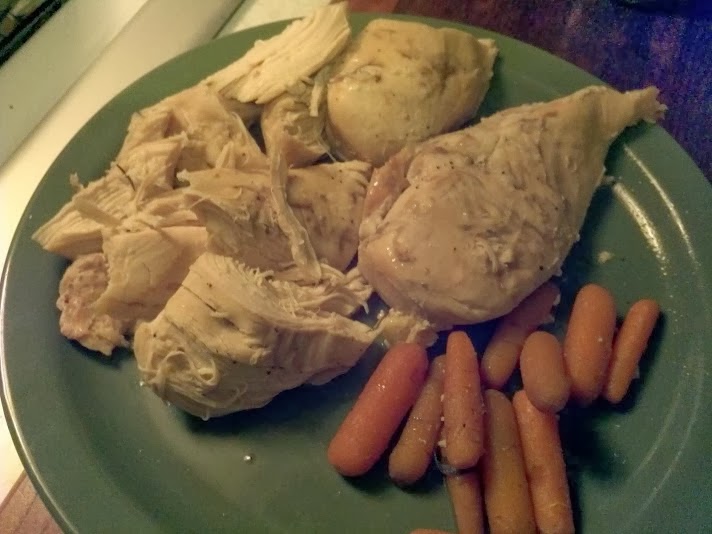
This slow cooker chicken makes an awesome alternative to boiling chicken for chicken salad, soups, tacos, etc or tastes amazing on it's own!


Sunday, September 29, 2013

Viva Pesto - Mix and Match Ingredients for Non-Traditional Pesto

Probably one of the most popular herb dishes out there is pesto. I started making pesto after I began planting herbs in my garden. Even though I was cooking with them - they were multiplying in my garden so quickly that I didn't know what to do with them so I stumbled into making pesto. This led to a few problems though. First, I didn't always have the ingredients I needed to make a traditional pesto, (How many people reaaaaaly keep pine nuts in stock at all times?) Secondly - not that I had all this pesto, what was I supposed to do with it?

First I started with a basic pesto recipe. The trick is you can mix up and switch out nearly any of these ingredients. It's as easy as picking an ingredient from each column. Bonus ingredients are optional.

Here's a couple of match-ups I made recently.


Pecan Romano Basil Pesto

1/4 cup olive oil
1 cup basil
1/4 cup pecans
1/4 cup Romano cheese
1 small clove garlic


Start by adding the nuts and cheese to the blender and grinding up well. You can add all your ingredients at once, but I find if I do this I don't get the find ground on my nuts and cheese that I want. Add garlic and blend. Add basil and begin blending - drizzle in olive oil until pesto blends smoothly at your desired texture (about 1/4 cup).


Purple Basil Almond Pesto
1/4 cup olive oil
1 cup purple basil
1/4 cup almonds
1/4 cup Romano cheese

Purple basil is one of my favorites - it adds such fabulous color to my garden and my food!

Start by blending the almonds and Romano. Add basil and begin blending - drizzle in olive oil until pesto blends smoothly at your desired texture (about 1/4 cup).


Personally I love pesto so much that I'll eat it plain over pasta or spread on crackers, but you can also try some of these ideas:
Pesto Mayo - just mix pesto into plain mayonnaise for a great sandwich spread
Cold Pesto Pasta Salad - mix in with a bit of mayo and your favorite pasta, chill and serve
Pesto Grilled Cheese - spread fresh bread with pesto, add your favorite cheese and grill
Pesto Salad Dressing - add vinegar and additional olive oil - whisk and serve

Pesto can also be frozen for later use. Most folks I know that freeze pesto use ice cube trays. Once frozen, pop out the cubes and place them in a Ziploc Freezer bag to use later.

So get out there - pick some basil (or parsley, or oregano or...) and enjoy!


Sunday, September 8, 2013

Rosemary Sage Herbed Vinegar

My passion for herbs and functional gardening leaves me with a lot of extra herbs. One of my favorite ways to use up extra fresh herbs - whether leftover from a recipe or not recently harvested and needed a little love - is to make homemade herbed vinegars. These vinegars make an amazing base for homemade salad dressings and are so easy - if you haven't done it before , you won't know why.

What you'll need:
2 sprigs fresh rosemary
1 sprig fresh sage
2 cups white vinegar
1 pint mason jar


Start by placing your herbs into the mason jar. I like to use large pieces of the sprig to give the finished jar a pretty look.


Pour your vinegar over the herbs and top with your canning lid. Let the herbs seep in the vinegar at least 24 hours before using. Use to make our own vinaigrette or give as a gift.


Wednesday, September 4, 2013

Same Herbs - New Ways

For any of my friends looking to get into gardening I always suggest to them to start with herbs. Most herbs are easy to grow, they're both beautiful and functional and don't take a lot of space. A lot of time though people don't know where to start. Here's a few ideas I wanted to share for some unique and different ways to add herbs to your home and garden.

The Herb Wheel
A couple years ago I came across the concept of an herb wheel - which is basically a large multi-sectioned planter that you can plant different herbs in. My husband designed and build this one for me using pressure treated lumber. For the bottom he used recycled lumber tarps - sturdy, not subject to rot and you don't have to worry about the weeds growing through.


Theme Gardens 
If you're planting herbs - why not ones with a theme or purpose. Here's a few different "theme" ideas for your herb garden.

Pizza Garden - What better way to celebrate one of everyone's favorite foods than by dedicating a garden to it! Think of all the great homemade pizza you'll be making. You could jazz up this garden seasonally by interspersing plantings of tomatos and other pizza vegetables.
Oregano
Basil
Thyme
Parsley
Chives

Tea Garden
Chamomile
Lemon Balm
Lavender
Any Type of Mint (see below)


Mint Garden - There are tons of varieties of mint on the market now. I'm sharing just a few of my favorites. Caution on this idea - mint is very invasive and will take over your garden if you don't keep it well sectioned off from other areas.
Sweet Mint
Chocolate Mint
Variegated Pineapple Mint
Peppermint
Spearmint


Medicinal Herb Garden - First off - please do your homework before using any herbs for medicinal purposes - I'm not a health professional. That said, remember you mom putting aloe on your finger the first time you burnt it? I bet many of you have aloe plants on your windowsill for that very purpose. Many herbs have a history of being used to treat various ailments. 
Sage
Thyme
Echinacea
Horseradish
Peppermint
Lemon Balm
St. John's Wort
Lavendar
Rosemary

Container Herb Garden
Who says your herb garden has to be a garden at all. A few planters is all it takes to get started. I've had great success growing lots of culinary herbs in container gardens - basil, rosemary, parsley, chives and the like!

Hope these ideas spur some new creativity in your garden. How do you do herbs?


Sunday, June 16, 2013

The Fabulous and Versatile Herb

A couple years ago a I picked up a really great book on edible landscaping. I was extremely inspired by the emphasis of used of plants for both beauty and function. It's hard to argue that many types of plants do this better than herbs. Store bought herbs are expensive. Growing your own herbs gives you an easy way to boost the flavor on every meal and save money. Most herbs are also extremely easy to grow and easy to care for. Many are perennial and almost all benefit from frequent cutting. On top of all this - herbs make for attractive garden plants mixed in among your other perennials. Here's a few of my favorites:
While perhaps not the most commonly used herb in my garden, I love the aesthetics of this perennial sage and it's beautiful little purple flowers. I do love placing fresh sage leaves in pitchers of water for a very refreshing summer drink. I'm also always sure to dry plenty of sage leaves in the late summer and fall for use all winter long - particularly with roast chicken, turkey and stuffing.

I use this flat leaf parsley (also perennial!) in lots of summer salads, marinades and as a garnish. It adds that great summer green color and freshness without overpowering a dish.
I have been amazed by the recent explosion in different varieties of mint available in local nurseries. It's not just sweet mint or spearmint anymore. I have recently seen blackberry mint, lemon mint, mojito mint, lime mint, orange mint, grapefruit mint, pineapple mint...etc. This has recently inspired me to start my own mint garden. Please keep in mind when planting mint - it is extremely invasive - so I would never recommend planting in your regular garden. I recommend container planting - or as I have done, planing it's own dedicated raised bed. Mint is great in many meals, but I like brewing fresh sun tea infused with leaves from my chocolate mint plant (yes ...it really tastes like chocolate and mint!)
Chives are by first the most used herb in my garden. They add beautiful green color and onion flavor to lots of dished - cold and hot alike. I add them to pasta and potato salads, use them as garnishes from everything from deviled eggs to mashed potato, and even like to nibble on them raw.  These are extremely prolific - they grow wild at my house in addition to in my garden and are extremely easy to grow perennially. The beautiful purple flowers they produce are just a bonus. However - if you plan to use the herbs for cooking - I recommend pinching off all the blooms as they start to form. I find if chives are allowed to flower, the green stalks become woody and unappetizing - however the flowers are edible if you'd like to try them. I keep one large plant in my herb wheel which I cut from generously to keep it from flowering and then let other plants in my garden flower.  
The flavor of dill is unmistakable. I use this heavily in canning. I also like to make salad dressings using mayonnaise, fresh garlic and dill along with other herbs. I also love the look of dill when it flowers - I always tuck some in my porch garden just for this purpose.
Many use lemon balm for medicinal purposes - it's long said to treat indigestion - or as a tea herb. I love it for it's fresh lemony scent and bright green bushy appearance. Once of my favorite practical uses is filling cheesecloth with fresh lemon balm and lavender and putting in a hot bath as a "bath tea". The smell is heavenly and very relaxing!

There is no way I could tackle every amazing herb there is out there. Just like the uses for herbs, the options are almost endless. These are just a few of my favorites - what are yours?